For builders, contractors and remodels

Post-construction cleaning in Roanoke, phase by phase.

Rough, final and touch-up cleans tied to your inspection and turnover dates, with crews who follow your site rules and paperwork ready before day one.

Homeowner with a remodel? Use the short quote form.
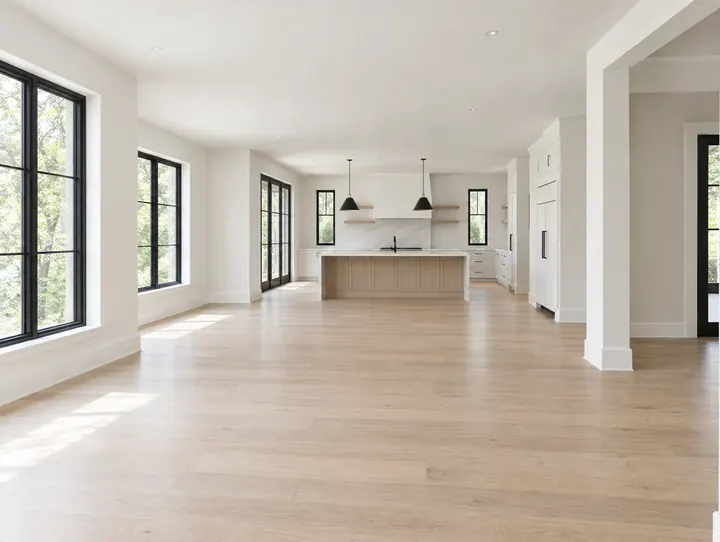
A bright, newly finished open-plan interior with black-framed windows, pale wood floors and a kitchen island

For general contractors

What builders get from us.

Your inspection date doesn't move because a sub ran late. We plan each clean around your milestones, work to your site rules, and leave the space ready for the people who walk it next.

A bid for each phase

Rough, final and touch-up bid separately, so you book only the phases your job needs.

Your site rules

We attend your orientation, sign in and out, and wear your PPE: hard hat, eye protection, hi-vis and boots.

Dust captured, not stirred up

HEPA vacuums and damp methods. No dry sweeping of fine dust, and no compressed-air blow-downs. [confirm HEPA equipment]

Careful with new glass

We remove paint, labels and film without scraping whole panes. Spot work only, and only with your OK on coated glass.

Debris to your dumpster

Bagged and carried to your dumpster on site. We don't haul off-site.

Paperwork first

A COI with additional-insured wording where your contract requires it, plus a W-9 and our workers' comp status: [Workers' compensation: carrier, or remove].

Rough, final, touch-up

The three phases.

Construction dust keeps settling for days after the trades leave, so one big clean the day before turnover rarely holds. Most projects need two or three visits, each one booked against a milestone rather than a calendar date.

The phases, explained
Post-construction phases at a glance
PhaseWhenWhat we doTypical timing
Rough cleanAfter framing, rough-ins and drywall, before finishesScrap and packaging to your dumpster, dust-controlled floors, sills, frames and boxes cleared for the next tradesOnce drywall is done; again between trades if your schedule needs it
Final cleanAfter the trades finish, before inspection or the owner walkthroughEvery finished surface top to bottom: glass, fixtures, cabinets inside and out, restrooms, floors by typeIdeally 1–3 days before your walkthrough, so settling dust doesn't undo it
Touch-up cleanAfter punch-list workSettled dust, fingerprints, punch-list marks and a final floor pass1–3 days before turnover or move-in

Rough clean

After framing, rough-ins and drywall, before finishes go in.

  • Scrap, packaging and cardboard to your dumpster
  • Floors HEPA-vacuumed [confirm HEPA vacuums] and damp-wiped; no dry sweeping of fine dust
  • Bulk dust off sills, ledges, window frames and electrical boxes
  • Window tracks cleared
  • Nails, screws and staples picked up
  • The space left ready for the next trades or an inspection

Final clean

After the trades finish, before inspection or the owner walkthrough.

  • Walls, reachable ceilings, vent and return faces, trim, door tops and frames HEPA-vacuumed [confirm HEPA vacuums] and wiped
  • Stickers, labels, protective film, overspray, caulk and adhesive removed. On glass: spot work only, a fresh blade on uncoated glass with your OK, never whole panes
  • Interior glass, mirrors, frames and tracks
  • Cabinets and drawers, inside and out
  • Restrooms and fixtures cleaned and polished
  • Appliances, inside and out
  • Light fixtures within step-ladder reach
  • Floors cleaned by type, following the maker's care guide: grout haze, sealed concrete, LVT, tile, wood. Carpet vacuumed; extraction on request, confirmed at your walkthrough
  • Final trash to your dumpster

Touch-up clean

One to three days before turnover or move-in, after punch-list work.

  • Settled dust re-wiped on every horizontal surface
  • Fingerprints off hardware, switches and glass
  • A final pass on every floor
  • Punch-list marks we can clean, cleaned; anything else noted for your team

Want the whole list to attach to a subcontract? See the post-construction checklist.

Scope, plainly

Ours, and not ours.

A clean scope line keeps the punch list short. This is how we usually split a Division 01 final-cleaning section with the other trades.

Ours

  • Finished surfaces: walls, trim, doors, frames and baseboards
  • Interior glass, mirrors, window frames and tracks
  • Plumbing fixtures, restrooms and appliances
  • Cabinets, casework and drawers, inside and out
  • Floors, cleaned by type to the maker's care guide
  • Grille, register and diffuser faces
  • Light fixtures within step-ladder reach

Not ours

  • Replacing HVAC filters (we'll remind you)
  • Duct or coil cleaning
  • Roofs and plenums
  • Elevator equipment
  • Debris hauling off-site
  • Lift work, or anything above step-ladder reach [max ladder height]
  • Exterior glass above ground level
  • Pressure washing [offer pressure washing?]
  • Lead, asbestos or mold work

Methods and safety

Construction dust, captured instead of stirred up.

Fine dust from concrete, tile, grout, stone and some joint compounds can contain respirable crystalline silica. OSHA's silica standard for construction, 29 CFR 1926.1153, tells employers not to dry sweep or dry brush where that could add to workers' exposure when wet methods or HEPA vacuuming will do, and not to blow surfaces clean with compressed air unless the dust is captured or there's no alternative.

We work that way on every site. It's kinder to new finishes too: dust that's captured can't scratch a floor or drift back onto trim after you've signed off.

  • Vacuum first, then damp-wipeHEPA vacuums on floors, sills, tracks, boxes and vents before anything is wiped, then damp microfiber with water changed often, so haze doesn't spread across new surfaces. [confirm HEPA equipment]
  • No dry sweeping, no blowingNo brooms on fine construction dust, no leaf blowers and no compressed-air blow-downs.
  • Finish-safe productsWe test in a hidden spot first and follow the maker's care guide for stone, wood, LVT, fixtures and glass. No acids on natural stone. Safety data sheets for everything we bring, on request.
  • Your site, your rulesOrientation, sign-in, badging and the PPE your site requires. We stay out of areas where trades are working unless your superintendent clears us.
  • We stop and tell youIf something looks unsafe, damaged or outside our scope, we stop, photograph it and tell your superintendent the same day.

Older buildings. For buildings built before 1978, your certified renovator performs the cleaning verification required by the EPA's Renovation, Repair and Painting (RRP) rule. We do the cleaning to their direction. We don't do lead, asbestos or mold remediation.

Scheduling and site requirements

Scheduling around your trades.

Tell us the milestone, not just the date. We'd rather move with your schedule than guess at it.

  • Final clean 1–3 days before your walkthroughDust keeps settling, so a final clean done a week early usually needs redoing.
  • Touch-ups on short notice, when our schedule allowsText us when the punch list is done. Notice we need for a touch-up: [notice needed for a touch-up].
  • Nights and weekendsTo fit your superintendent's schedule and keep us out of the trades' way. [confirm nights and weekends for builders]
  • Zone by zone on larger jobsFloor by floor or suite by suite as areas are released, so finished spaces can be closed off while work continues elsewhere.
  • A phase report with photosAreas cleaned, items noted for your trades, and a ready-for-walkthrough line. See a sample phase report.

What we need from the site

  • The areas released to us for the cleaning window, with trades finished there. Work after the final clean is what the touch-up is for
  • Power, water and working lights where we're cleaning
  • A dumpster on site, or a spot you name for bagged debris
  • Parking and a place to stage our equipment
  • A site contact we can reach: your superintendent or project manager
  • Your site rules and orientation time before day one

Paperwork

Your COI before our first day on site.

A certificate on its own doesn't add you to anyone's policy; the endorsement does. Send your contract's insurance language with the request and we'll have it right the first time.

  • General liability[Insurance: general-liability carrier; limits go on the COI only]. Certificates usually go out the same business day.
  • Additional insured on requestOngoing and completed operations, waiver of subrogation, and primary and non-contributory wording, added by endorsement where your written contract requires it. [confirm blanket endorsements with the insurance agent]
  • Workers' compensation[Workers' compensation: carrier, or remove]. Virginia's statutory-employer rule (Va. Code § 65.2-302) can make a general contractor answerable for a sub's uninsured workers, so ask for it with the COI.
  • Business license[Business license: City of Roanoke BPOL number]
  • Invoicing your wayOne invoice per phase with your PO or job number. Ongoing builders can apply for net terms.

Builder bid request

Request a bid.

Send what you have: plans, a few site photos, or just the address and your dates. Every project is different, so every bid is custom. Site walks are free, with no obligation.

What happens next

  1. A quick reply. We reply within 2 business hours, with any questions.
  2. We review your plans or walk the site. Whichever tells us more about the job.
  3. You get a bid for each phase within 2 business days of the walk or plan review, in writing.

What shapes a bid

The phases you need, finished square footage and levels, finish types, how much glass, the dust load, and your schedule windows.

Need our paperwork first? Request a COI or a W-9, or print our one-page capabilities statement for the bid file.

You

Homeowner? Just put your name.
We'll send the bid here.
We'll only text about this bid. No marketing unless you opt in below.

The project

Street address, or the nearest intersection and town.
Before 1978? Your certified renovator handles the RRP cleaning verification.

Phases and dates

Phases you need (optional, choose any)
For example: site open 7 to 5, cleaning after 3 or on Saturdays.
Inspection, owner walkthrough, turnover, opening. For example: rough clean after drywall, week of the 12th; final before the inspection on the 3rd.

The site

Site requirements (optional, choose any)
Trades still working during cleaning? (optional)

Fine for a rough clean. A final clean needs each area released first.

Anything above step-ladder reach? (optional)

We don't operate lifts; we'll plan high fixtures with your team.

Power, water and lights on? (optional)
Dumpster on site? (optional)

Finishes and paperwork

Floor finishes (optional, choose any)
Certificate holder, additional insured (ongoing and completed operations), waiver of subrogation, primary and non-contributory, and any deadline.

Plans and photos

One PDF or image. The whole form can carry about 8 MB, so for a large plan set, paste a link below instead.
Special finishes (stone, hardwood, specialty glass), how invoices should be submitted, or a bid deadline.

We reply within 2 business hours. Messages after hours get a reply by 9am the next business day.

For homeowners

Moving back in after a remodel.

A contractor's broom-clean isn't a clean you can unpack into. Most homeowners need a final clean before the boxes come back, and a short touch-up a few days later, once the last of the dust has settled.

Before the boxes come back

  • Supply vents and return grilles vacuumed and wiped
  • Inside every cabinet and drawer, before anything goes back
  • Window tracks and sills vacuumed out
  • A touch-up visit after the punch-list work
  • Your reminder: change the HVAC filter after the final clean, or ask your contractor to

Builder questions

What builders ask us.

Something else? Read the construction FAQ or send us a text.

Which phases do you do?

All three: rough, final and touch-up. Each phase is bid on its own, so you can book one, two or all three. Many builders book the final and touch-up and use a rough clean on larger jobs, or when an inspection needs clear floors.

Can you work while trades are on site?

For rough cleans and zone-by-zone work, yes. We follow your site rules and stay clear of areas where trades are working unless your superintendent clears us. For the final clean we need each area released, because work done after it brings the dust back. That's what the touch-up is for.

Do you haul debris?

No. We bag scrap, packaging and the debris from our own cleaning, and carry it to your dumpster on site. We don't haul anything off-site, so we'll need a dumpster or a spot you name for the bags.

Can you meet our COI requirements?

Send your requirements and we'll confirm before the bid is final. Our coverage: [Insurance: general-liability carrier; limits go on the COI only]. Additional insured for ongoing and completed operations, waiver of subrogation, and primary and non-contributory wording are added by endorsement where your written contract requires it. [confirm blanket endorsements with the insurance agent] Workers' compensation: [Workers' compensation: carrier, or remove]. Request a certificate; it usually goes out the same business day.

Do you remove stickers, paint and caulk from glass?

Yes, carefully. Labels and film come off by hand. Paint, overspray and caulk get spot work only: a fresh blade on small spots of uncoated glass, with your OK, and never across whole panes, because scraping a pane can scratch it. On coated glass we ask first. Anything that won't come off safely goes on the phase report for your painter or glazier.

How much notice do you need for a touch-up?

[notice needed for a touch-up, e.g. 2 business days]. Text us when the punch list is done and we'll fit you in as soon as our schedule allows. If you know your turnover date, book the touch-up with the final clean and we'll hold the slot.

Do you clean high fixtures or use lifts?

We work from step ladders only [max ladder height]. We don't operate scissor or boom lifts. Tell us about high fixtures, clerestory glass or tall diffusers in your bid request, and we'll plan them with your team.

Related

The phases, explained

What rough, final and touch-up cleans each cover, and how to schedule them around inspections and the punch list.

Read the guide

Vendor and insurance info

COI, W-9, net terms and multi-site setup for general contractors, developers and property managers.

COI, W-9 and net terms

Building in Botetourt County or around Smith Mountain Lake? We work there too. See every area we serve.

Ready when you are

Let's walk your space.

Tell us a little about it and we'll set up a free walkthrough. Your written scope and quote follow within 2 business days. We reply within 2 business hours.

Or call (540) 505-1295 · Office Mon–Fri 8am–6pm